Custom Plush Bags: A B2B Manufacturing and Sourcing Guide
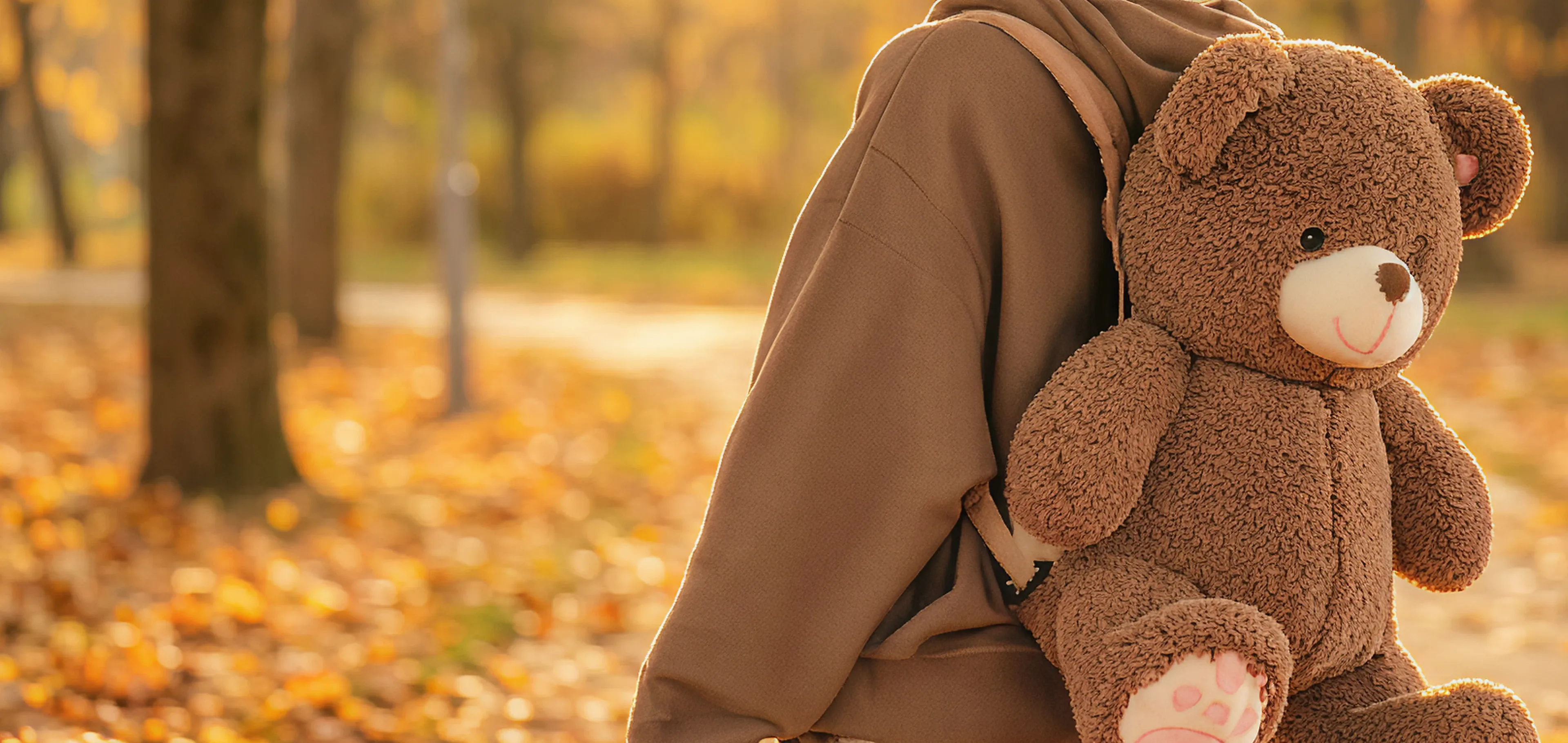
Custom plush bags combine a functional carry product with the surface appeal of a plush character. The category covers plush backpacks, crossbody bags, tote bags, drawstring bags, pencil cases, and convertible bag charms, and it serves IP merchandise programs, children's retail, theme parks, and promotional campaigns. Because the product must carry weight rather than simply hold its shape, plush bag production involves structural decisions that standard plush toys never face.
This guide covers the manufacturing details that determine whether a custom plush bag program succeeds: construction and reinforcement, hardware selection, decoration methods, sizing, compliance requirements, order quantities, and cost structure. It is written for brand managers and procurement teams preparing a first plush bag order.
What Falls Under Custom Plush Bags in B2B Sourcing
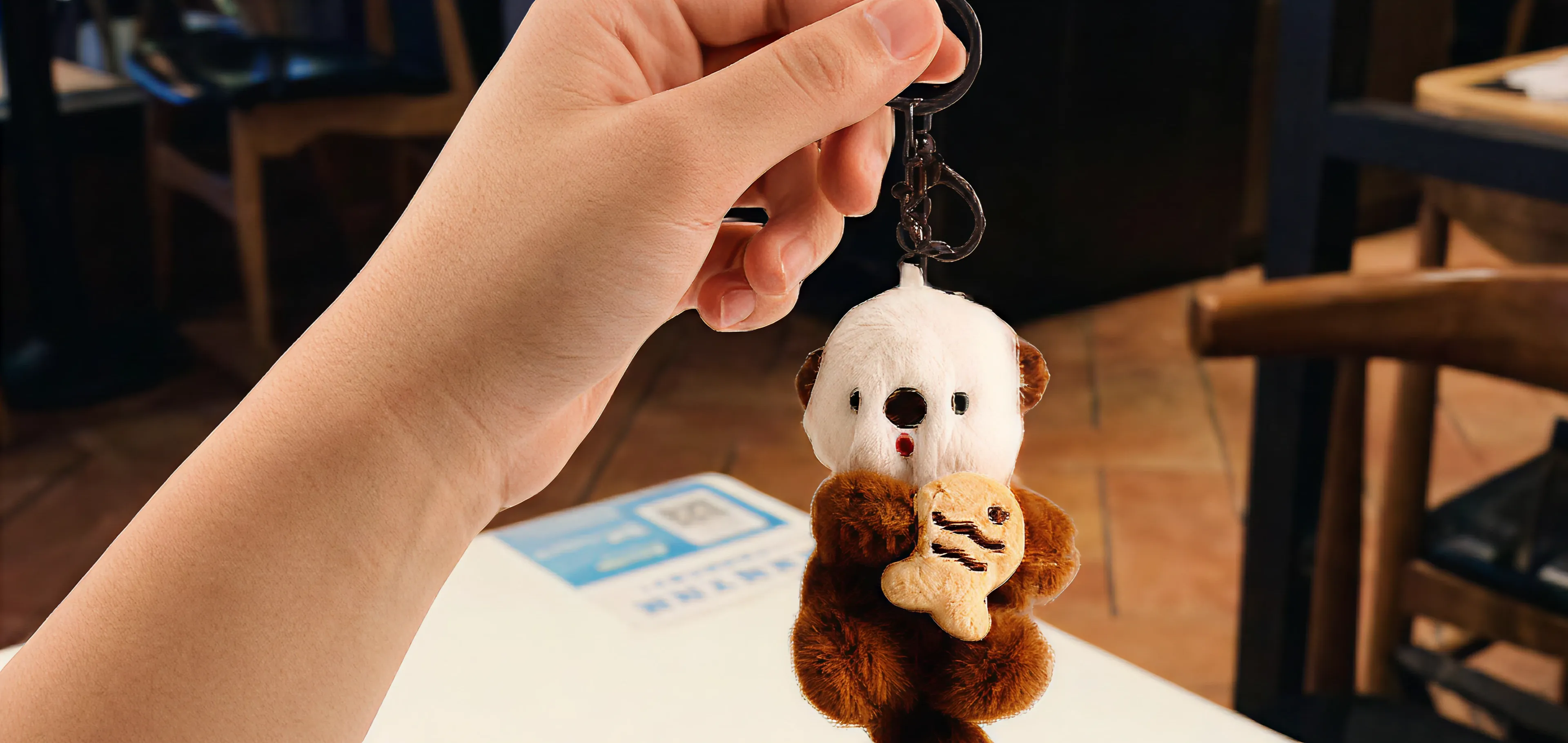
In factory terms, a plush bag is any carry product where the outer shell is a plush textile and the product is expected to hold weight in daily use. The main product families are plush backpacks for children and character retail, crossbody and shoulder bags built around a character head or body, plush tote bags for lifestyle and merchandise programs, drawstring bags, and plush pencil cases. Bag charms and hanging accessories follow a related but lighter construction, covered in our plush keychain and bag charm guide.
The defining difference from a plush toy is load-bearing construction. A plush doll needs to look correct on a shelf. A plush backpack must carry two kilograms of books through a school year without strap failure, seam splitting, or zipper breakdown. This requirement drives every material and construction decision in the sections below.
Construction: Shell, Lining, and Reinforcement
How is a plush bag constructed differently from a plush toy?
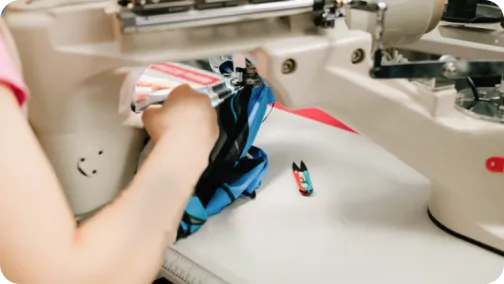
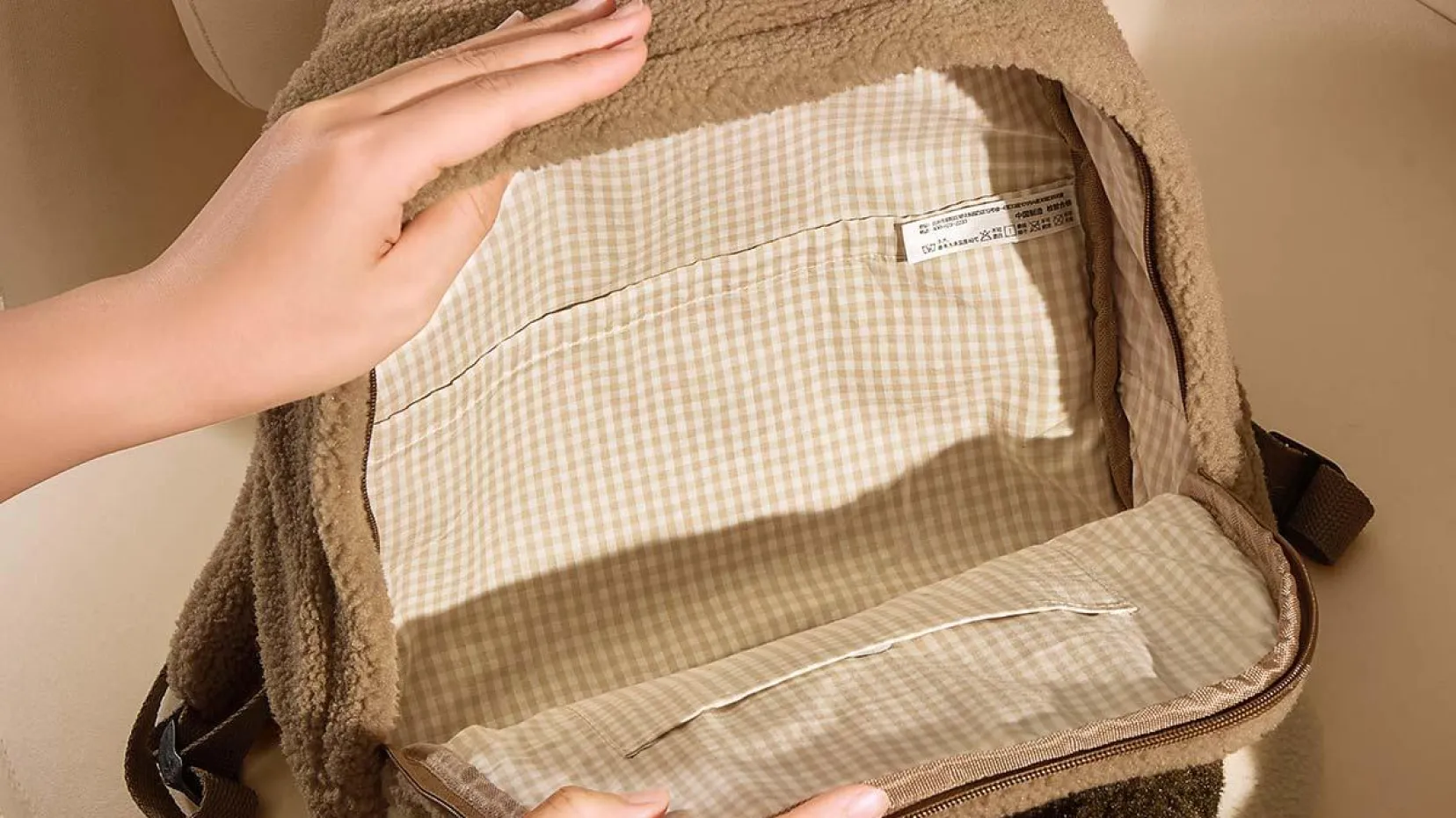
A plush bag uses a three-layer build: a plush outer shell, a structural interlining that gives the bag its shape and load capacity, and a woven inner lining that protects contents and hides the construction. Load-bearing points such as strap anchors are reinforced with additional fabric patches and bar-tack stitching, and the bag opens with a zippered compartment integrated into the plush pattern.
The outer shell uses the same fabric families as plush toys, typically crystal super soft, Velboa, or minky. The interlining is the critical layer: a medium-weight fusible interfacing or foam sheet laminated to the shell panels. Without it, the plush fabric stretches under load and the bag loses its shape within weeks. The inner lining is usually 190T or 210T polyester taffeta, sewn as a separate bag and attached at the zipper tape and top edges.
Strap anchors deserve specific attention during sample review. Each anchor point should show a reinforced box stitch or bar-tack pattern visible through the lining, with the anchor webbing extending at least 5 cm into the bag body. This detail, more than any other, predicts whether the bag survives its first year of use.
Hardware and Strap Systems
Hardware selection determines both the lifespan and the compliance profile of the bag. The working components:
| Component | Common specification | Selection note |
|---|---|---|
| Zipper | Nylon coil #5 or #8 | Nylon coil over metal teeth for child products; smoother, no sharp edges |
| Slider / puller | Zinc alloy or molded plastic | Custom molded pullers shaped as the character add strong shelf appeal |
| Adjusters and buckles | POM plastic | Plastic preferred for children; metal reserved for adult lifestyle bags |
| Strap webbing | Polypropylene or polyester, 20–38 mm | Width scales with bag size and intended load |
| D-rings / lobster clasps | Steel or zinc alloy | Required for detachable straps and bag charm attachments |
All metal hardware on children's products must pass chemical screening for lead and heavy metals under CPSIA and EN 71-3. Request material certificates for zippers and hardware at the quotation stage; retrofitting compliant hardware after sampling adds weeks to the schedule.
Decoration and Branding Methods
What is the best decoration method for a custom plush bag?
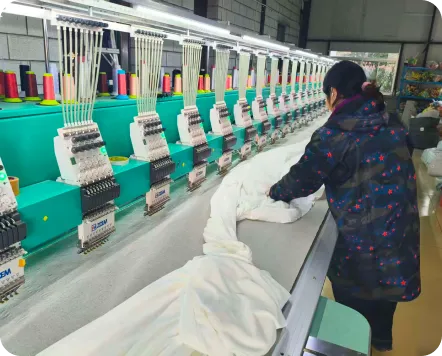
Embroidery handles logos, facial features, and small branding marks because it survives abrasion and washing. Sublimation printing covers full-color artwork across flat shell panels. Woven labels on the strap or lining carry brand identity at the lowest cost. Most programs combine embroidery for the character face with a printed or labeled brand mark.
Placement constraints differ from plush toys. Embroidery must stay clear of zipper curves, strap anchors, and gusset seams, because hooping near these areas distorts both the stitch and the structure. Printing is completed on flat panels before assembly, so artwork must be mapped to the pattern pieces during sampling. Fabric options and their printability are listed on our materials page.
Sizing, Capacity, and Pattern Development
Plush bag sizing is specified by capacity and compartment dimensions rather than the outer character dimensions. A character backpack that measures 30 cm tall may offer a usable compartment of only 22 by 18 by 8 cm once the plush volume of the head and limbs is accounted for. Buyers should define the intended contents, such as a tablet, a water bottle, or A5 stationery, and let the pattern team work outward from the compartment.
Pattern development for bags runs one step longer than for dolls, because the compartment, lining, and plush shell must be drafted as matched sets. First samples take 10 to 14 days. Fit checks during sampling should include loading the bag with the stated contents and carrying it, because strap angle and back-panel curvature only reveal problems under load.
Safety and Compliance for Plush Bags
Compliance routing depends on the target user. Bags designed for children under 12 are children's products in the US and require CPSIA compliance: third-party testing, a Children's Product Certificate, and tracking labels, with specific attention to lead in hardware and small parts on detachable components. In the EU, a character bag with play value may be classified as a toy under EN 71 rather than as luggage, and the classification should be settled with the testing laboratory before production.
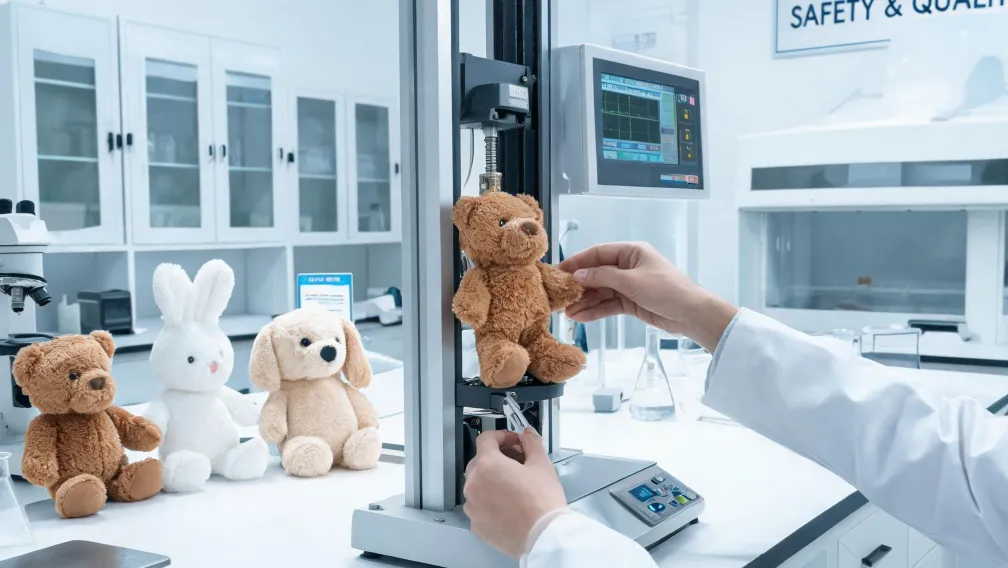
Two failure modes appear repeatedly in testing. Detachable charms and zipper pullers fail small-parts assessment for the under-three age grade. Drawstring bags face cord length restrictions in both the US and EU for children's products, and many buyers substitute fixed loops or breakaway closures to avoid the issue entirely. Our testing workflow is described on the safety and compliance page.
Sampling, MOQ, and Production Timeline
What is the minimum order quantity for custom plush bags?
The standard MOQ is 500 pieces per design, reflecting the combined cost of plush shell materials, lining, and hardware. Simpler products such as drawstring bags and pencil cases can sometimes run from 300 pieces. Sampling takes 10 to 14 days, and bulk production runs 35 to 50 days after sample approval.
| Stage | Typical duration |
|---|---|
| Design review and material confirmation | 2–4 days |
| First sample | 10–14 days |
| Revision rounds (1–2 typical) | 5–8 days each |
| Bulk production | 35–50 days |
| Inspection and packing | 3–5 days |
Hardware lead time is the most common schedule risk. Custom molded zipper pullers require 15 to 20 days for tooling, so designs with custom pulls should lock that component first and run fabric sourcing in parallel.
Cost Structure of a Custom Plush Bag Order
Unit cost builds from six components: plush shell fabric, interlining and lining, hardware, straps and webbing, decoration, and labor. As a working reference, a plush crossbody bag with an embroidered face lands between $3.50 and $5.50 FOB at 1,000 pieces. A structured character backpack with adjustable straps, lining, and custom zipper pulls ranges from $6.00 to $9.50. Pencil cases and drawstring bags sit between $1.80 and $3.00.
Labor accounts for 35 to 45 percent of unit cost, driven by panel count and the lining assembly. Hardware is the second lever: moving from custom molded pullers to stock pullers with a woven brand label typically saves $0.30 to $0.60 per unit. Programs that pair a bag with matching plush keychains share fabric and embroidery setup across both items, which lowers the effective sampling cost for the collection.
Starting Your Custom Plush Bag Project
Maris develops custom plush bags for IP owners, children's retail programs, theme parks, and promotional buyers, with pattern making, embroidery, hardware sourcing, and lining assembly handled in one facility. Send your artwork, target compartment size, and estimated quantity through the contact page, and we will return a manufacturability review and quotation within 48 hours. Completed projects are available in the custom plush bags collection.
FAQ
The standard MOQ is 500 pieces per design. Simpler constructions such as drawstring bags and pencil cases can sometimes run from 300 pieces, and repeat orders of an approved design have more flexibility.
First samples take 10 to 14 days because the plush shell, structural interlining, and inner lining are drafted as a matched set. Most designs are approved within one to two revision rounds of 5 to 8 days each.
Yes, provided the capacity is defined at the pattern stage. The usable compartment is smaller than the outer character dimensions once plush volume is accounted for, so the intended contents should be specified in the inquiry and load-tested during sampling.
Bags for children under 12 require CPSIA compliance in the US, including third-party testing and tracking labels. Detachable charms and pullers fail small-parts assessment for the under-three grade, and drawstrings face cord length restrictions, so these elements are usually redesigned for young age groups.
Yes. Custom molded pullers require 15 to 20 days for tooling and add roughly $0.30 to $0.60 per unit compared with stock pullers. They should be locked first in the schedule because they carry the longest component lead time.
A plush crossbody bag with an embroidered face runs $3.50 to $5.50 FOB at 1,000 pieces. A structured character backpack with lining, adjustable straps, and custom pulls ranges from $6.00 to $9.50. Pencil cases and drawstring bags sit between $1.80 and $3.00.
Yes. Pairing bags with matching plush keychains lets both items share fabric lots and embroidery setup, which lowers the effective sampling cost of the collection and keeps colors consistent across the product line.