Custom Plush Bags and Backpacks: A B2B Manufacturing and Sourcing Guide
Custom plush bags and backpacks occupy a specialized manufacturing space between traditional textile accessories and soft toys. Used extensively in IP merchandising, theme park retail, and lifestyle brand extensions, these products require a rigorous engineering approach. They must deliver the tactile appeal and character accuracy of a plush figure while fulfilling the load-bearing and utility requirements of a functional bag. This guide examines the technical parameters of B2B plush bag production, detailing structural design, material selection, hardware integration, compliance protocols, and cost modeling for enterprise procurement teams.
Structural Architecture and Pattern Drafting
The defining engineering challenge in plush bag manufacturing is volume management. A standard plush toy is filled entirely with polyester fiber; a plush bag must maintain its external aesthetic volume while reserving internal negative space for cargo capacity. Pattern engineers achieve this using a multi-layer construction framework.
The outer shell defines the character or silhouette. An intermediate layer of high-density EVA (ethylene-vinyl acetate) foam, polyurethane sheet, or strategically restricted PP cotton stuffing provides structural rigidity. The innermost layer is a non-stretch woven lining that protects the structural fill and creates the storage cavity. Gusseted walls frequently utilize 3mm to 5mm EVA foam sheets sewn directly into the seam allowances, preventing the bag from collapsing when empty.
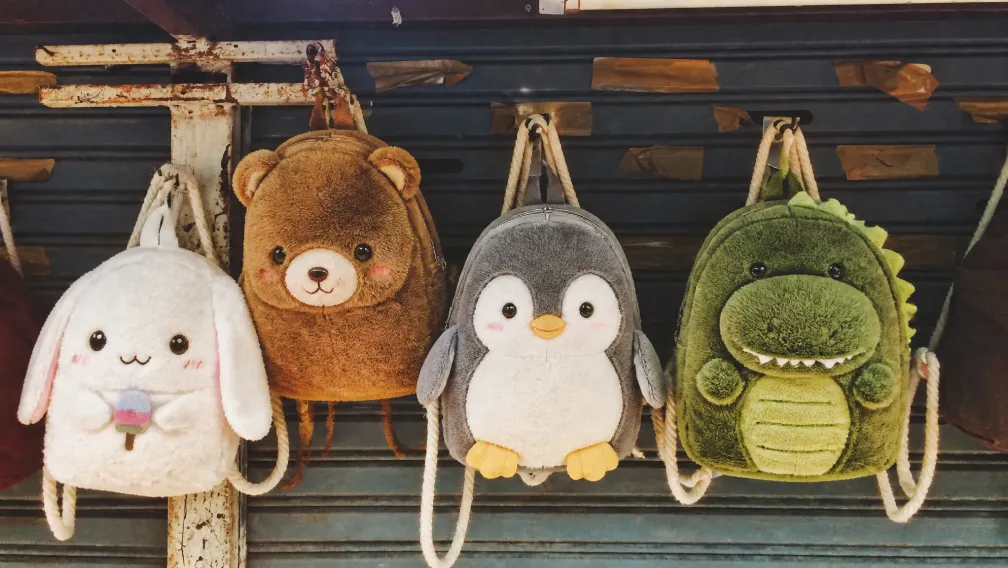
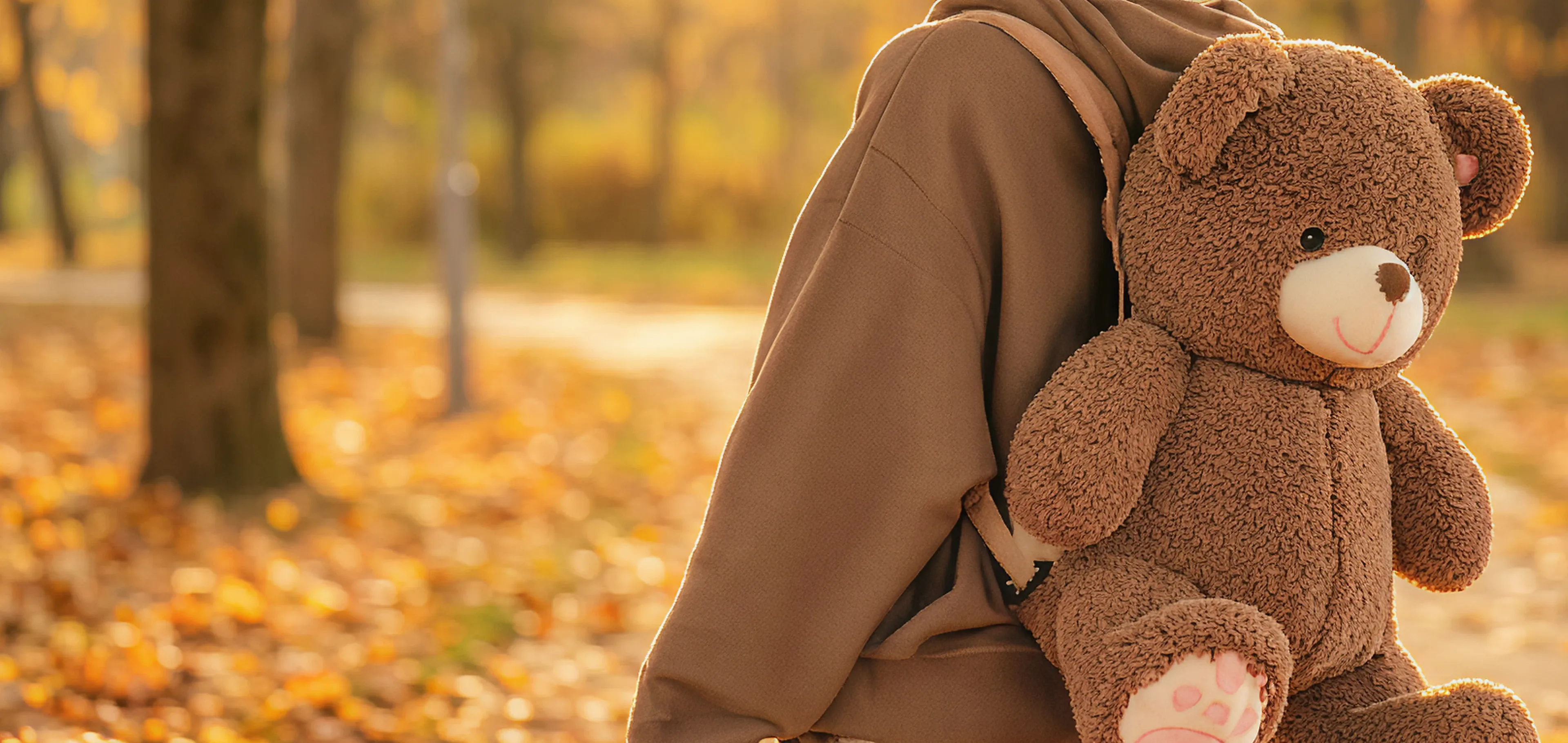
For 3D character backpacks, the head and limbs are typically fully stuffed with hollow siliconized PP cotton. These appendages must be isolated from the main cargo compartment by a secondary lining wall. This isolation ensures that if the interior lining sustains a tear from sharp cargo (like keys or pens), the internal stuffing does not spill into the storage area.
Primary Shell and Interior Lining Materials
The exterior fabric dictates the visual identity, washability, and friction resistance of the bag. Knitted polyester fabrics dominate the specification sheets across the category.
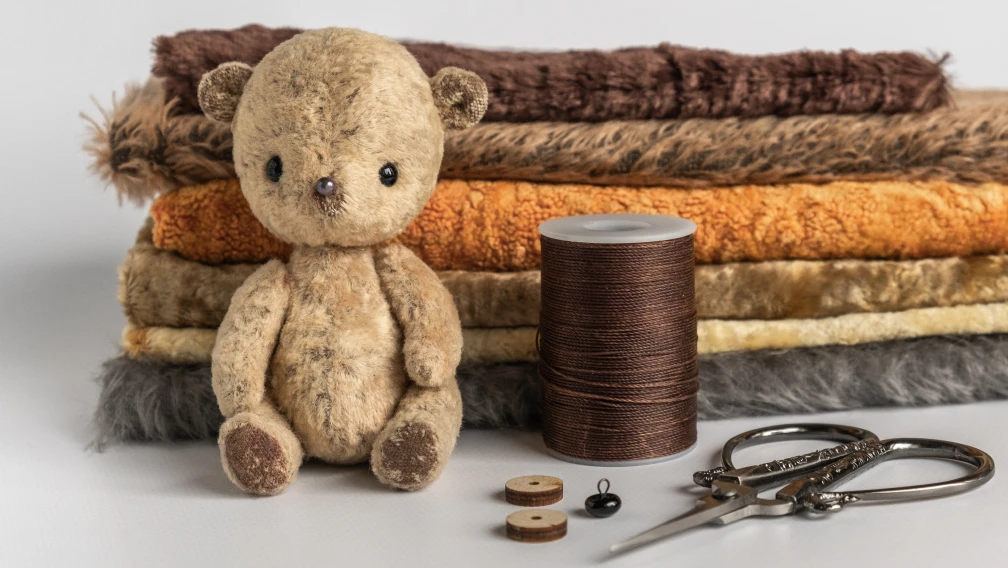
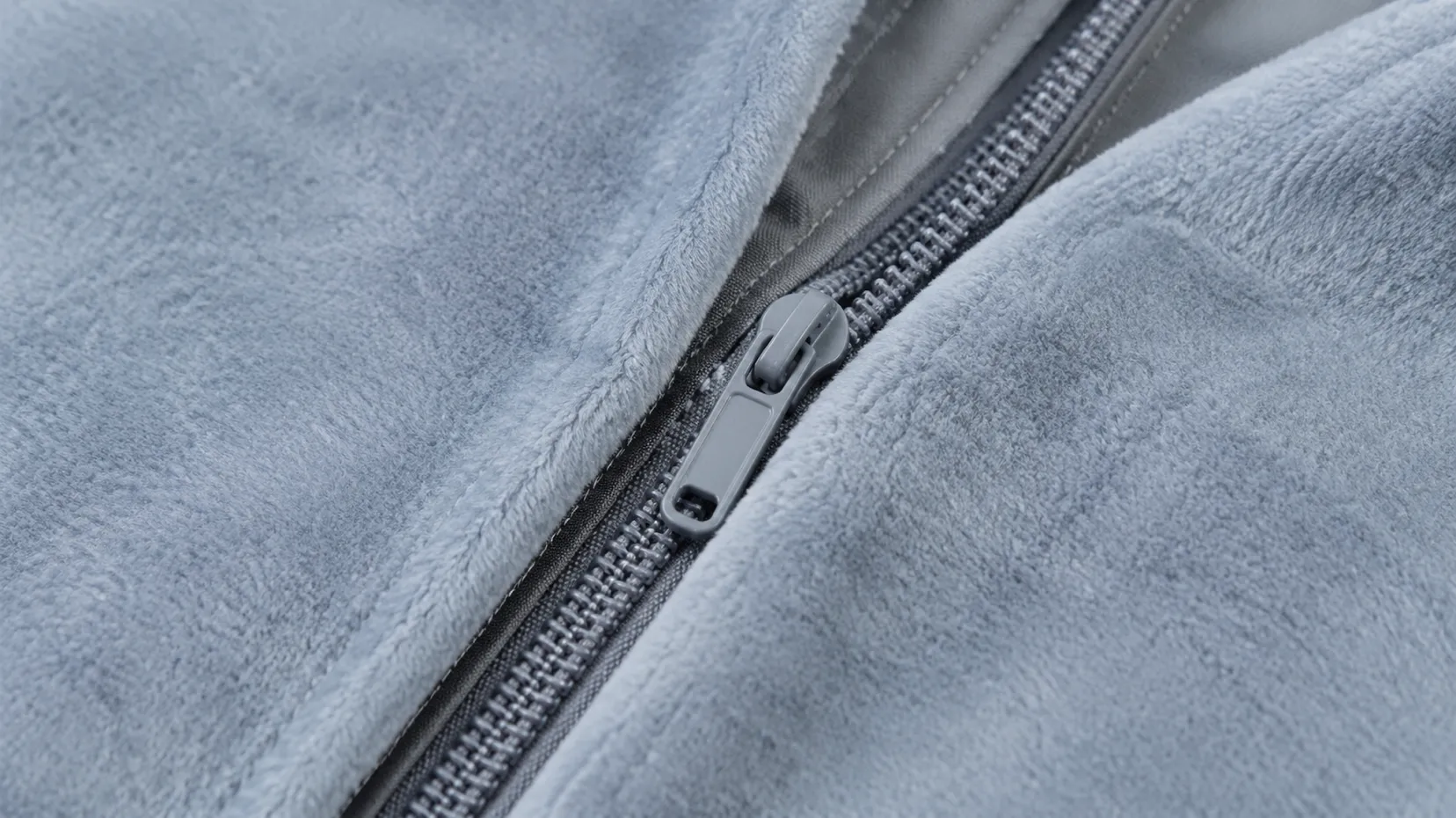
Velboa (180–220 GSM) offers a short, highly durable pile suitable for detailed facial embroidery and high-friction daily use. Crystal super soft fabric provides a smoother, denser surface ideal for full-color sublimation printing, commonly utilized in promotional merchandise programs. Premium retail lines frequently specify faux rabbit fur or sherpa fleece. However, these long-pile materials require specialized cutting techniques to minimize shedding at the seams and complicate zipper installations, requiring fabric guards to prevent jamming.
For the interior, 210D or 420D polyester Oxford cloth is the industry standard. It is lightweight, highly tear-resistant, and easily wiped clean. Cotton twill is occasionally specified for higher-end lifestyle brands, though it increases both material costs and baseline fabric weight. A critical construction detail is that the lining must be patterned marginally smaller than the exterior shell; this prevents bagging, wrinkling, and fabric bunching inside the main compartment.
| Component | Standard Material Options | Best Application |
|---|---|---|
| Exterior Shell | Velboa, Crystal Super Soft, Sherpa | Embroidery, Printing, Premium Retail |
| Interior Lining | 210D / 420D Oxford, Cotton Twill | Standard cargo protection, Heavy use |
| Structural Support | EVA Foam, Polyurethane Sheet | Shape retention in gussets and main panels |
| Straps | Nylon Webbing, Plush-wrapped PP | Load-bearing distribution and comfort |
| Hardware | Nylon Coil Zippers, POM Buckles | Compliance with heavy metal restrictions |
Hardware Specification and Integration
Hardware transitions a plush item into a functional accessory. The specification of zippers, pullers, straps, and buckles directly impacts both the product lifespan and the safety testing routing.
Nylon coil zippers (typically #3 or #5 gauge) are the standard choice. Metal zippers are rarely specified due to excess weight, higher material cost, and strict compliance limitations regarding heavy metals in children's products. When installing zippers on long-pile fabrics, the zipper tape must be sewn with an internal fabric placket to prevent the pile from catching in the slider teeth. Custom molded PVC or silicone zipper pullers add significant branding value. These must be securely attached via a metal jump ring, which is subsequently soldered closed or subjected to a minimum 90-Newton pull test if the item is age-graded for children.
Shoulder straps utilize high-density nylon or polypropylene webbing. For premium backpacks, the webbing is encased in a matching plush shell and padded with 5mm PE foam. The anchor points where the straps meet the bag body are the highest stress areas. Factory specifications require reinforced stitching—typically a box-X stitch pattern—using heavy-duty bonded nylon thread.
Quality Assurance and Load Testing Protocols
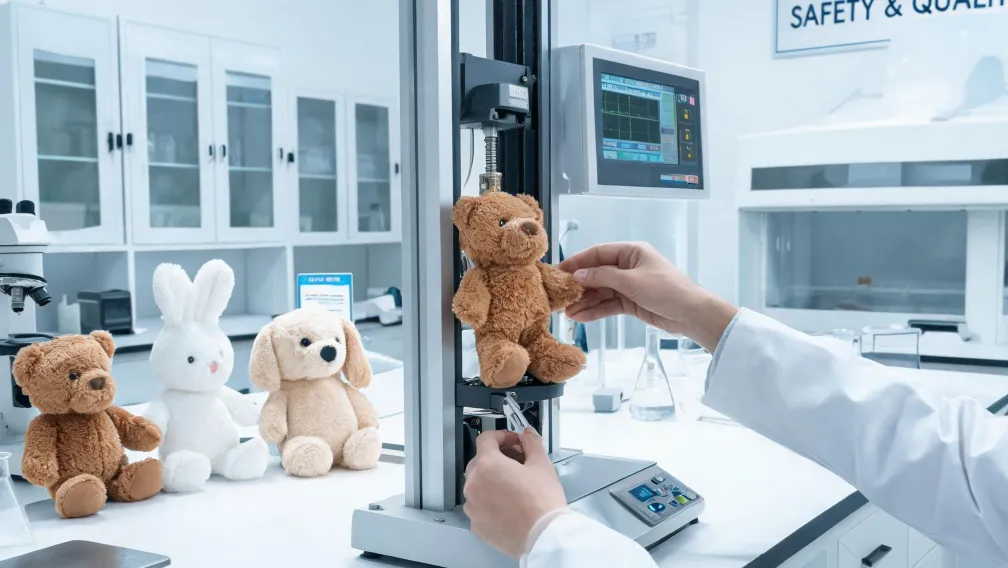
Plush bags undergo rigorous physical testing that extends beyond standard soft toy protocols. Load-bearing capacity is verified through static and dynamic drop tests at the factory level. A standard procedure involves loading the bag with a predefined weight (e.g., 3kg to 5kg, depending on the volume and target demographic) and suspending it by the shoulder straps for 24 hours to check for material stretching or seam failure.
Dynamic testing involves dropping the weighted bag from a height of 0.5 meters to check the integrity of the strap anchor points and zipper closures. Main body seams must withstand mandatory minimum pull forces. For items classified as toys, the standard requirement is 70 Newtons for Europe (EN 71) or 15 lbs for the US (ASTM F963). Seam slippage on the woven interior lining is a common failure point; manufacturers mitigate this by serging (overlocking) the raw edges of the lining fabric prior to final assembly.
The Prototyping and Iteration Cycle
Developing a custom plush bag prototype is a three-phase procedure. Phase one involves flat pattern drafting, translating 2D artwork into precise shell and lining geometries. The factory produces a preliminary "white sample" using generic fabric to verify overall dimensions, internal cargo capacity, and strap placement ergonomics.
Phase two introduces the specified shell fabrics, accurate pantone colors, and embroidery details. This sample evaluates pile direction, color accuracy, and zipper function. Phase three is the pre-production (PP) sample, manufactured utilizing bulk-run materials and final customized hardware. The approved PP sample serves as the binding reference standard for mass production quality control. Procurement teams should allocate 14 to 21 days for the complete prototyping sequence, factoring in one standard round of revisions.
Safety Standards and Regulatory Compliance
The compliance pathway depends entirely on the product's marketing, physical size, and target user demographic. A plush backpack shaped like a cartoon mascot and sized for a toddler is unequivocally classified as a toy. Consequently, it must comply with ASTM F963 (US) or EN 71 (EU). This mandates stringent laboratory testing for soluble heavy metals in the hardware, strict flammability resistance, and mandatory small parts security.
If the bag features metal hardware or PVC trims, it must pass REACH (EU) or California Proposition 65 (US) testing for phthalates, lead, and cadmium limits. Furthermore, CPSIA regulations require a permanently affixed tracking label detailing the manufacturer, production date, and batch number. Conversely, a plush tote bag marketed strictly to adults may bypass toy-specific mechanical tests but remains subject to regional textile composition labeling and general consumer product safety directives. Aligning the compliance strategy with your manufacturer prior to prototyping prevents costly re-engineering delays. Refer to our safety and compliance overview for laboratory specifics.
Cost Structure and Volume Economics
B2B buyers must account for the increased labor economics associated with plush bags. The integration of inner linings, foam stabilizers, zippers, and reinforced strap stitching increases the cut-and-sew assembly time by 30% to 50% compared to a basic plush doll of identical overall size.
A standard 25cm plush character backpack utilizing Velboa, basic nylon webbing, and standard nylon zippers typically ranges from $4.50 to $6.80 FOB for a 1,000-piece production run. Custom PVC zipper pullers add roughly $0.15 to $0.30 per unit, alongside a minor one-time tooling fee. Sublimation printing across the entire shell increases the fabric yield cost due to strict pattern matching requirements on the cutting table. Minimum Order Quantities (MOQ) generally start at 500 to 1,000 pieces to absorb the setup costs for custom hardware, webbing runs, and fabric dyeing.
Packaging, Logistics, and Freight Optimization
The logistics profile of plush bags requires strategic planning. Unlike standard soft toys, which can be aggressively vacuum-compressed to save shipping volume, plush bags featuring EVA foam inserts or rigid plastic hardware cannot be fully flattened without causing permanent structural creasing or damaging the internal components.
To maintain retail-ready shapes, higher-end bags are often stuffed with recyclable paper dunnage or air pillows during transit. This preserves the visual presentation but drastically increases the cubic volume and the subsequent sea freight cost per unit. For promotional or budget-focused programs, bags are shipped completely flat. Buyers must weigh the freight savings of flat packing against the labor cost of reshaping and stuffing the bags upon arrival at their destination distribution center. Individual polybags must feature suffocation warnings printed in local languages and include ventilation holes if the opening exceeds standard regulatory limits.
Initiating a Custom Plush Bag Procurement Program
Transitioning a 2D IP concept into a functional, compliant accessory requires precise specification. Maris produces engineered custom plush bags for global IP licensors, retail chains, and promotional distributors. Procurement teams should provide technical drawings, dimension requirements, capacity targets, and target age demographics to initiate the quoting process. Our engineering team conducts a thorough manufacturability review and returns a structured quotation outlining material costs and tooling within 48 hours. Submit your project details through our contact page to begin the prototyping phase.
FAQ
Most custom plush bag programs require a minimum of 500 to 1,000 pieces per design. This volume is necessary to meet minimum procurement thresholds for custom-dyed fabrics, specialized hardware manufacturing (such as custom pullers), and to ensure factory assembly line efficiency. Repeat orders using identical patterns and hardware can sometimes be accommodated at 300 to 500 pieces.
Structural integrity is maintained by inserting high-density EVA or polyurethane foam sheets between the plush exterior and the woven interior lining. For 3D elements like character heads or snouts, isolated chambers are tightly stuffed with PP cotton to hold the shape independently of the bag's main storage compartment, ensuring the bag looks full even when empty.
Yes, provided it is engineered for compliance from the outset. If marketed to children under 14 (or under 12 in the US), the bag must pass EN 71 or ASTM F963 testing. This requires specifying heavy-metal-free zippers, utilizing locked-stitch seams, ensuring all pullers withstand mandatory bite and pull tests, and eliminating any hazardous small parts.
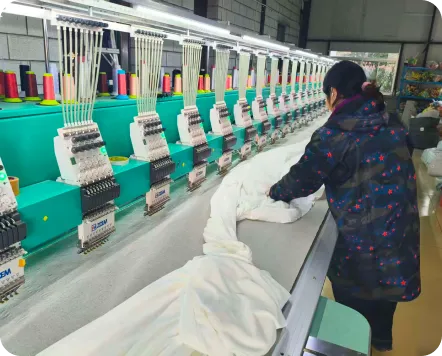
After the pre-production (PP) sample is officially approved, bulk manufacturing generally takes 35 to 45 days. This timeline includes fabric weaving and dyeing, hardware fabrication, cutting, embroidery, sewing assembly, and final quality inspection. Sea freight logistics will add an additional 25 to 40 days depending on the final destination port.
Yes. Custom molded PVC or silicone zipper pullers are highly common for branded merchandise and add significant perceived value. The setup tooling cost for these pullers is typically under $150. Woven labels, custom-printed interior linings, and branded hardware buckles are also standard options, though they may carry higher MOQ requirements.
This depends entirely on the structural design. Soft, unstructured bags can be shipped flat or partially compressed to optimize freight density. Bags with rigid foam inserts or complex 3D features are usually shipped with internal paper dunnage or air pillows to prevent permanent creasing. Stuffed shipping increases the volumetric weight and freight cost, but ensures a retail-ready appearance upon unboxing.